 Every show needed help to get it up and down from town to town. The New York Clipper gave great detail to the shows of the day but not too many advertisements. Billboard however had a fullline of ads through out each publication. This help wanted ad was in the Billboard on December 10, 1904 on page 27.
Friday, May 23, 2008
Looking for a Job?
Every show needed help to get it up and down from town to town. The New York Clipper gave great detail to the shows of the day but not too many advertisements. Billboard however had a fullline of ads through out each publication. This help wanted ad was in the Billboard on December 10, 1904 on page 27.
Help Wanted ads from the Past!
 Here was a great example of help needed by the "Horse King of the World" in his one season of circus ownership. Wm. P. Hall always claimed he found it much more profitable to buy and sell circus equipment, rail cars, wagons, and animals than it was to own his own show. This was found in Billboard on March 25, 1905 on page 30.
A fantastic elephant trainer most people never heard about.

Here we find an ad for probably the most successful elephant trainer no one ever heard about. Eph Thompson came up through the Adam Forepaugh dynasty and eventually went to Europe where he was allowed to be successful. He was extremely good at his training of elephants but was hindered in the United States due to the segregationist beliefs of the times. After years of success in Europe, Mr. Thompson returned to the ZUnited Staes with his own outstanding elephant act. This ad was found in Billboard on December 22, 1906 on page 20.

Tuesday, May 20, 2008

Now we have thee largest supplier of animals in America from the late 1800's thru the turn of the century. Carl Hagenbeck had his own show at the 1904 St. Louis World's Fair under the direction of his son Lorenz. Eventually his show was bought by ben Wallace in the latter part of 1905. 1906 saw the new Carl Hagenbeck and Wallace Circus hit the road. Mr. Hagenbeck was furious that his name was being used and even filed suit to stop the use of his name. Alas, the Hagenbeck-Wallace Circus is remembered throughout the course of Circus history. This particular ad was placed in Billboard on January 12, 1907 as found on page 27.

Wednesday, April 30, 2008
 There were times when a show's needs changed and they had surplus equipment and / or animals to sell. Here we find an ad offering two female Asian elephants for sale. They were bought by William P. Hall in Lancaster, Missouri and then he contracted with the Campbell Bros. Circus less than 10 days later to lease to own. Mr. Hall got Alice back in 1912 when the Campbell show was foreclosed by the bank. Lulu's disposition is unknown after this. This ad was found in Billboard on March 23, 1907.
Monday, April 28, 2008
Menagerie suppliers

Any circus worth its weight carried animals. Every wagon show needed lots of horses to move from town to town. Menageries were an attraction all by themselves in the mid 1800's without any performance. So for the interested parties that needed animals for their shows, there were various brokers or dealers that could supply the animals that were required. Some were placed by order, some were ready for instant delivery being held in warehouses and some zoos for the time being. This particular ad was in the New York Clipper on March 11, 1899, on page 34.
Sunday, April 27, 2008
Circus for sale!

There were times when a show didn't quite make as much as they hoped for and then had to dispose of said items. Especially anything they had to feed. Here we find the John F. Hummel show up for sale in Cincinnati, Ohio in 1898. We know from other historical references that the Campbell Bros. out of Fairbury, Nebraska bought all of the train, the Elk, the Kangaroo and the sacred cattle. I don't know who bought the rest. This ad was found in the New York Clipper on Dec. 3, 1898 on page 683.
Help Wanted # 1

Every show on the road needed help to move the show, advertise, perform, book it, take care of animals, railraods, etc. Some shows used really nice artwork in their ads such as seen here by the The Great Floto Shows. The contact was Otto Floto. the show had not started to use the Sells Floto title yet. That would come about in 1906. This fine ad was found in the NY Clipper on October 29, 1904 on page 845.
Help Wanted # 2

The Great Walter L. Main show posted this ad in the NY Clipper on March 11, 1899, page 34. How about the term "Chandelier" man? Things have really changed over the years.
Friday, April 25, 2008
Circus Printers # 5

There were occassions when the Printing firms were still owed substantial amounts of money from unpaid bills when shows went under. Here we see Leon Washburn selling his entire circus through the Donaldson address. This ran in the April 22, 1899 issue on page 157.
As you can see, I haven't posted in awhile. I sent them all in backwards. Better luck next time.
Circus Printers # 4

The Donaldson Litho Co. would eventually become one of the greatest printers of Circus paper in America. They would rank right up there with the Strobridge, Erie, Courier, Enquirer, and Riverside Printing firms. This ad appearred in the October 22, 1898 issue on Page 583.
Circus Printers # 3

The Ackermann-Quigley Lithographing Co. operated from 1894 to the 1930's. The company moved three times over the years in Kansas City, Mo. The president was J.A. Quigley and Vice-president was G.A. Ackermann. In later years the Ackermann would be dropped.
This oufit printed for many shows over the years including the Campbell Bros. Great Consolidated Shows out of Fairbury, Nebraska. When the bank foreclosed on the Campbell show in 1912. the Ackermann-Quigley Lithographing Co. filed a suit for $10,000.00 in unpaid printing costs. This ad ran in the June 13, 1908 issue on page 453.
Circus Printers # 2

This was a Printing firm that was used by the Great Wm. P. Hall show in 1905, its only season on the road.
This appearred in the March 25, 1899 issue on page 75.
Circus Printers #1

Around the turn of the century, The entertainment world was covered by many different forms of press but the New York Clipper and Billboard were the most predominant. Flyers, Handbills, tickets, posters, show cards, and anything else relating to publicity was being printed by many different Printing houses. These many have been by woodblock printings, engravings, typesettings or lithograhy methods. Here are a couple of the lesser known and more famous Printing houses as they advertised in the New York Clipper. This is from April 29, 1899 found on page 174.
Sunday, August 13, 2006
The Lerches # 1
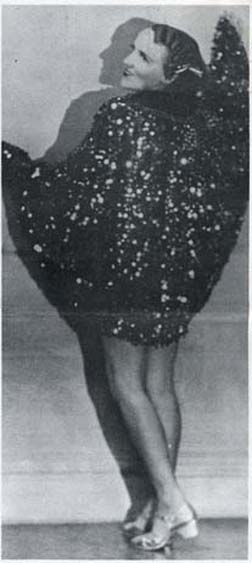 This is one of several Press Photos that Bill and Gen Lerche used over the years. This particular shot was printed in Southern Sawdust in 1975. Bill Lerche started in show business in 1916 doing comedy routines, traps and rings. He toured on the Hagenbeck-Wallace show, John Robinson, M.L.Clark and Sons, Campbell Bros., and Harris Bros. Shows as well as smaller dog and pony shows, vaudeville dates, and fairs before even meeting Gen in 1924.
The Lerches # 2
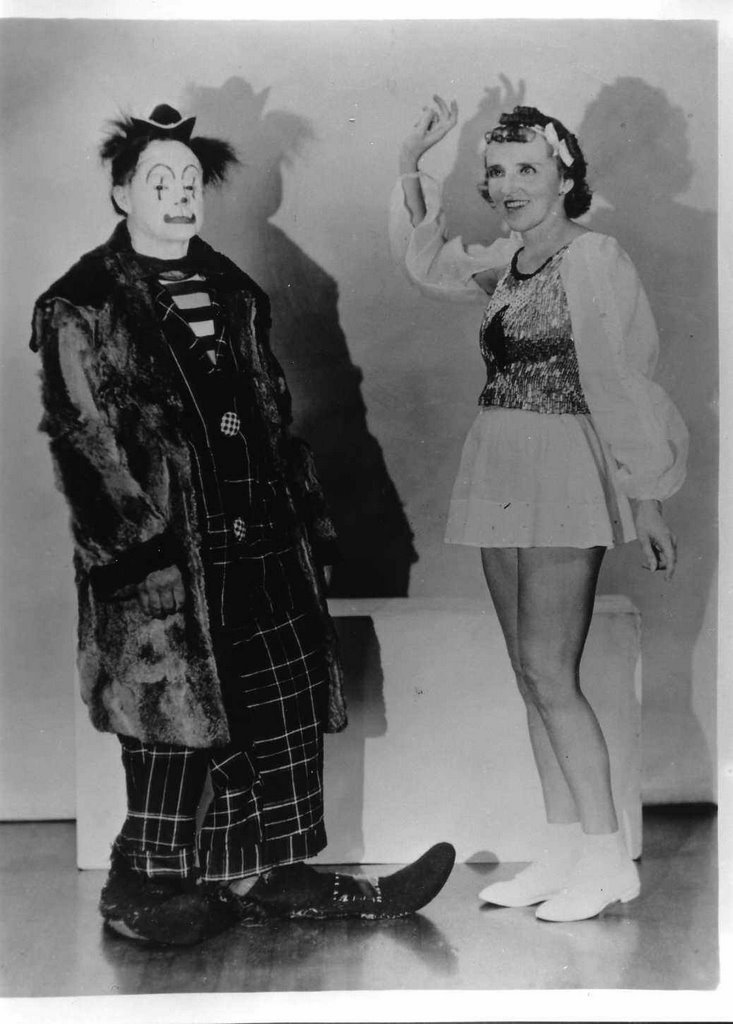
This is Bill and Genieve Lerche. Bill met Gen in Upper Sandusky, Ohio on July 4th, 1924 while he was performing with another performer named Betty Zenaro. Betty and Gen had grown up together. Bill and Gen were married in January of 1926. Betty later married Fred Leonard. Betty Leonard and Gen Lerche remained close friends throughout the rest of their lives. Bill and Gen performed up till 1941 when the depression had hurt everyone the worst and settled in Bellevue, Ohio.
The Lerches # 3
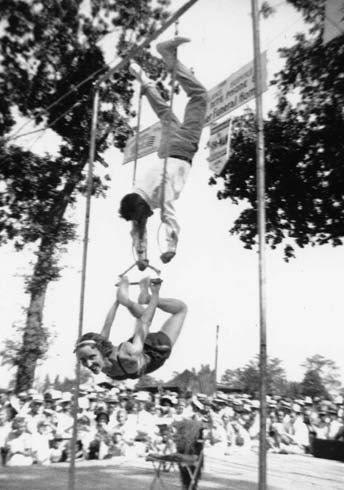 This is Bill and Gen working their ring act on the fair circuit around the late 1930's I believe. They offered the clowning routines, the Comedy Table Rock and the Ring act on various shows such as Cooper Bros. ,Haag Bros., Conroy Bros., Zellmar Bros., Cole and Rogers. They also made a living working the vaudeville circuit, fairs and festivals, theaters and night clubs.
The Lerches # 4
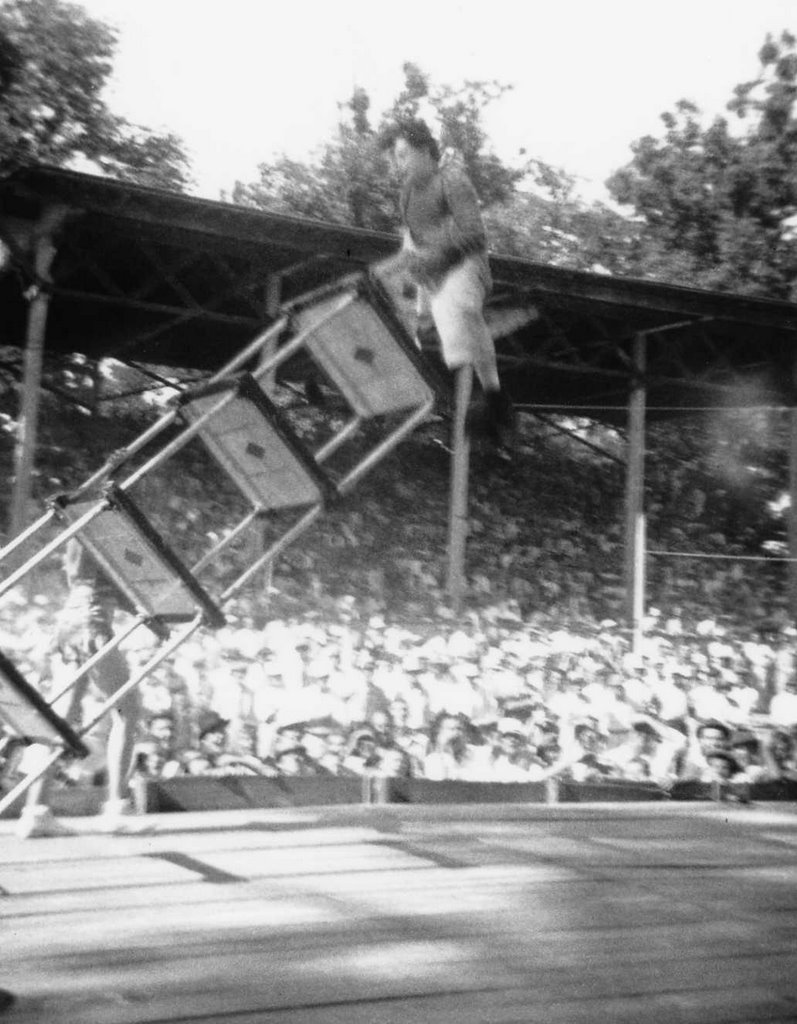
This is Billy Lerche doing his Comedy table rock on the fair circuit. The table rock was a comedy of errors in assemblying these four tables on top of each other. We still have them in the barn and trust me they are not light. Once on top of each other, Billy crawled in and out of each one until he reached the top while sitting on a chair and getting the tables rocking back and forth. When they finally were going to fall, Billy rode the chair all the way down, did a somersault with the chair and finished the routine sitting in the chair to the howls and laughter from the entire audience.
Subscribe to:
Posts (Atom)

